Step 1: Implement Contract-First Design and Pre-Runtime Validation
A contract-first approach to API design ensures requirements are explicit, enforceable, consistent, and verifiable. You stop relying on hope and start relying on code. Pre-runtime protections include creating well-defined API contracts using IDLs like OpenAPI, gRPC, and Thrift.
If you generate your server stubs and client SDKs from these contracts, you eliminate entire classes of integration failures.
According to NIST, NIST SP 800-228-upd1 defines 5 specific pre-runtime protection controls. Secure API design proactively addresses the OWASP Top 10 API Security Risks through binding agreements. You lock down the surface area before the code runs.
Here are the NIST pre-runtime controls: 1. Define API contracts using IDLs. 2. Validate schemas against these contracts. 3. Enforce policy-as-code in the pipeline. 4. Scan dependencies for known vulnerabilities. 5. Review authentication and authorization flows pre-deployment.
Let's look at a schema validation script. You can use a tool like Spectral to enforce rules in CI/CD.
# Run Spectral validation against the OpenAPI contract
npx @stoplight/spectral-cli lint openapi.yaml --ruleset .spectral.json
The version of this I keep coming back to does schema validation in the pull request, because it stops bad contracts from merging into the main branch. You catch the broken property before it becomes a production incident. This is a core tenet of API Architecture and Security Best Practices.
When you define an OpenAPI specification, you are creating a single source of truth. Your CI/CD pipeline should parse this document and fail the build if it lacks proper security schemes. For example, you can write a custom rule that blocks any endpoint missing a valid OAuth2 scope.
This forces developers to think about authorization before they write the business logic.
Every time I have seen this fail, the cause was the same: developers bypassed the contract layer. The fix was making the contract the only way to deploy code. If the service does not match the IDL, the pipeline breaks.
You must treat your IDL as a security artifact. It is not just documentation. It is the executable specification of your attack surface. By validating this specification early, you reduce the risk factors associated with broken object-level authorization and excessive data exposure.
Consider the difference between a monolithic approach and a microservices approach. In a monolith, you have a single compiler checking types. In microservices, you have network boundaries. IDLs act as your distributed compiler. They catch mismatches before runtime.
We use tools like Protoc for gRPC and OpenAPI Generator for REST. These tools take the contract and produce the server interfaces. If a developer tries to change a response payload structure without updating the contract, the build fails.
This simple measure prevents backward-incompatible changes from reaching production.
This proactive stance is what separates mature platforms from fragile ones. You cannot bolt security on later. You must build it into the very fabric of your deployment pipeline.
Step 2: Architect Layered Security and Gateway Topologies
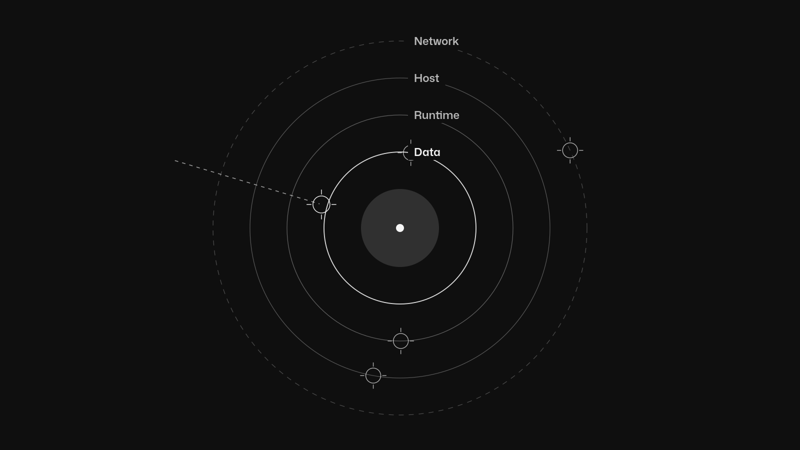
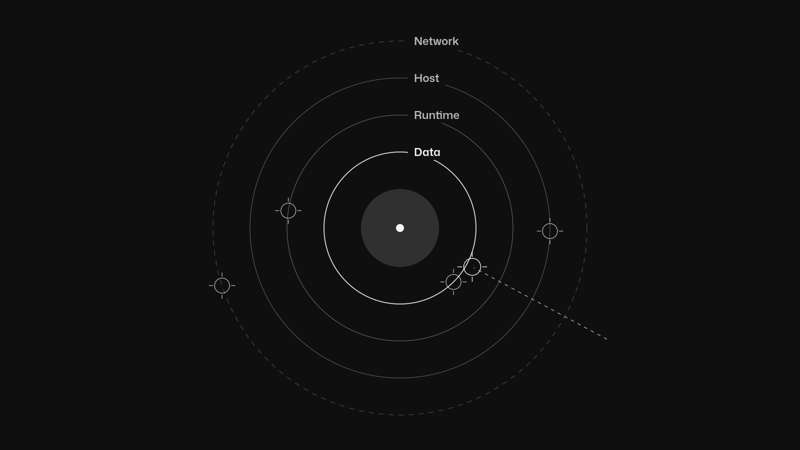
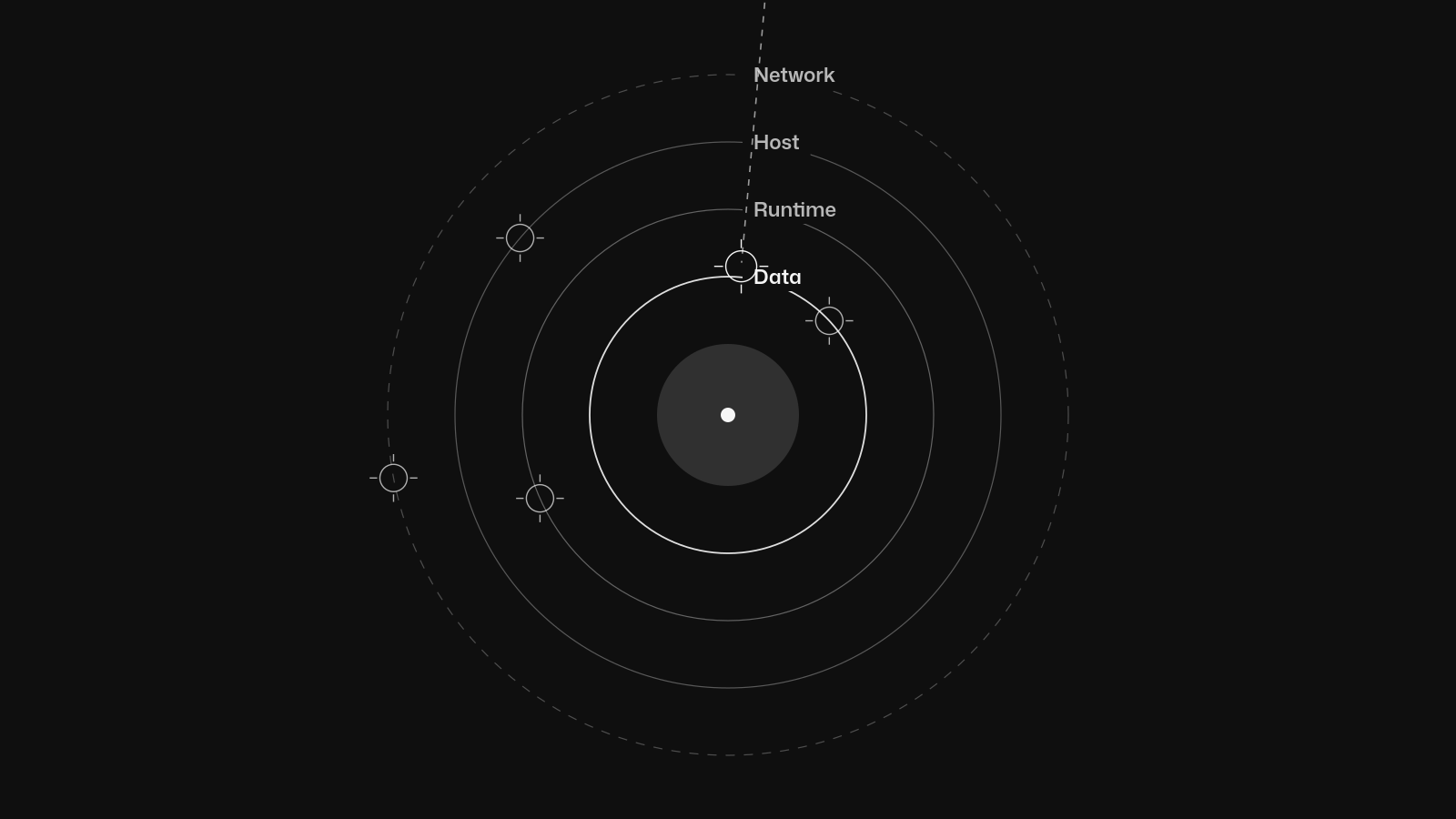
An API gateway is a centralized entry point that enforces security and routing policies before traffic reaches internal services. Layered API security places identity controls at the identity system, shared runtime controls at the gateway, and domain-specific authorization at the service level. This separation of concerns is critical for API Architecture and Security Best Practices.
But do not confuse the layers.
Gateway security functions include validating tokens, applying coarse-grained access rules, enforcing rate and concurrency limits, and validating request schemas. You do not want your microservices re-createing token validation logic. The gateway handles the shared concerns, leaving the service to handle business logic.
And that is exactly how it should be.
According to NIST, three API gateway patterns exist: Centralized gateway, Hybrid gateway, and Distributed gateway. Choosing the right pattern dictates your latency profile and operational overhead.
Let's look at a concrete configuration. You can configure Envoy to handle token validation and routing.
# Envoy configuration for JWT validation
http_filters:
- name: envoy. filters. http. jwt_authn
 typed_config:
 "@type": type.googleapis.com/envoy. extensions. filters. http. jwt_authn. v3. JwtAuthentication
 providers:
 jwt_provider:
 issuer: "https://auth.example.com"
 audiences:
 - "my-api"
 remote_jwks:
 http_uri:
 uri: "https://auth.example.com/.well-known/jwks.json"
 cluster: "auth_cluster"
 timeout: 5s
 rules:
 - match:
 prefix: "/api"
 requires:
 provider_name: "jwt_provider"
This configuration offloads the token validation to the gateway, and the internal service only receives requests with a valid, verified identity. This is how you build scalable security without drowning your service code in boilerplate auth checks.
A layered security architecture delegates identity verification to the gateway, leaving domain-specific authorization to the individual service.
Let's break down the gateway patterns. A centralized gateway routes all traffic through a single cluster, which is easy to manage but adds a network hop for internal calls. A distributed gateway deploys sidecars to every service, removing the extra hop but increasing operational complexity.
And a hybrid gateway uses a centralized edge gateway for external traffic while relying on distributed sidecars for internal traffic.
When you evaluate these patterns, you must consider the trade-offs. Centralized gateways create a bottleneck. Distributed gateways require a tool control plane. Hybrid gateways give you the best of both worlds, but they demand careful configuration to avoid configuration drift.
I prefer the hybrid model. It protects your internal services from external threats while keeping internal communication fast. You use the edge gateway for coarse-grained access and the sidecar for fine-grained, domain-specific authorization.
Your gateway must also validate request schemas. If the payload does not match the OpenAPI contract, the gateway rejects it outright. This prevents malformed requests from ever reaching your application code.
Consider the operational overhead. A centralized gateway is a single point of failure, meaning if it goes down, all your services are unreachable. A distributed gateway spreads this risk, but it makes troubleshooting significantly harder.
You need distributed tracing to understand where a request actually fails.
The technology you choose matters. Envoy and Istio are powerful, but they have a steep learning curve. You need to invest in tooling to manage the configuration. If you do not, your team will spend more time debugging the mesh than building features.
Gateway topologies are not set in stone. You can start with a centralized gateway and evolve to a hybrid model as your traffic grows. The key is to make a conscious decision based on your latency requirements and team size.
How Do You Enforce Runtime Protections and Throttling Mechanics?
Runtime protections enforce security and availability while the API is actively serving traffic. They include encryption in transit, end-user and service-to-service auth/authz, request/response validation, and resource consumption mitigations like rate limiting, timeouts, and circuit breaking.
According to NIST, NIST SP 800-228-upd1 defines 6 specific runtime protection controls. You must set up all of them to maintain API Architecture and Security Best Practices.
Let's focus on resource consumption. NIST SP 800-204 lists throttling alongside load balancing and resiliency as core gateway or service mesh features. You need to protect your services from being overwhelmed.
AWS API Gateway builds throttling using a token bucket algorithm and may return HTTP 429 status codes when limits are exceeded. However, you must remember that AWS API Gateway throttling limits are described as best-effort targets, not guaranteed ceilings, and you cannot rely solely on the cloud provider to protect your downstream services.
You need to configure your own circuit breaking and timeouts. In Istio 1.20+, you can define these rules using a DestinationRule.
| Throttling Mechanism | Implementation | Failure Mode | Recovery |
|---|---|---|---|
| Token Bucket | AWS API Gateway | HTTP 429 returned | Client retries with backoff |
| Circuit Breaking | Envoy Outlier Detection | 5xx errors, connection pooling | Traffic rerouted, service recovers |
| Timeouts | Envoy/Envoy filters | Request hangs, 504 Gateway Timeout | Client fails fast, no resource lock |
Throttling limits are best-effort targets, not guaranteed ceilings, requiring local circuit breaking to protect downstream services.
Let's look at the specific runtime controls. Encryption in transit is non-negotiable, and you must use TLS 1. 3 for all external traffic.
For internal traffic, mutual TLS (mTLS) ensures that both the client and server verify each other's identities. This prevents man-in-the-middle attacks inside your network.
Request and response validation is another critical control, and your gateway should validate that the incoming request matches the OpenAPI schema. If it does not, the gateway rejects it before it hits your service.
Circuit breaking is your defense against cascading failures. When a service starts returning 5xx errors, the circuit breaker trips, and it stops sending traffic to the failing service, giving it time to recover. You configure this in Envoy using outlier detection.
Timeouts are equally important. A default timeout of 15 seconds is too long for most microservices. You should set aggressive timeouts, typically around 1-2 seconds for internal calls. If a service cannot respond in that time, it is better to fail fast than to let the request hang.
These measures are not optional. They are the difference between a graceful degradation and a total system outage. When you combine throttling, circuit breaking, and timeouts, you build a resilient system.
Consider the token bucket algorithm. It allows for bursts of traffic while maintaining an average rate, and you configure the bucket size and the refill rate. If the bucket is empty, the request is rejected. This is a simple but effective way to throttle traffic.
However, you must monitor your throttling. If you are constantly hitting your limits, you need to investigate, and it might be a misconfigured client or a malicious attack. You need to download your logs and analyze the traffic patterns.
Step 3: Deploy Negative Testing and Runtime Threat Detection
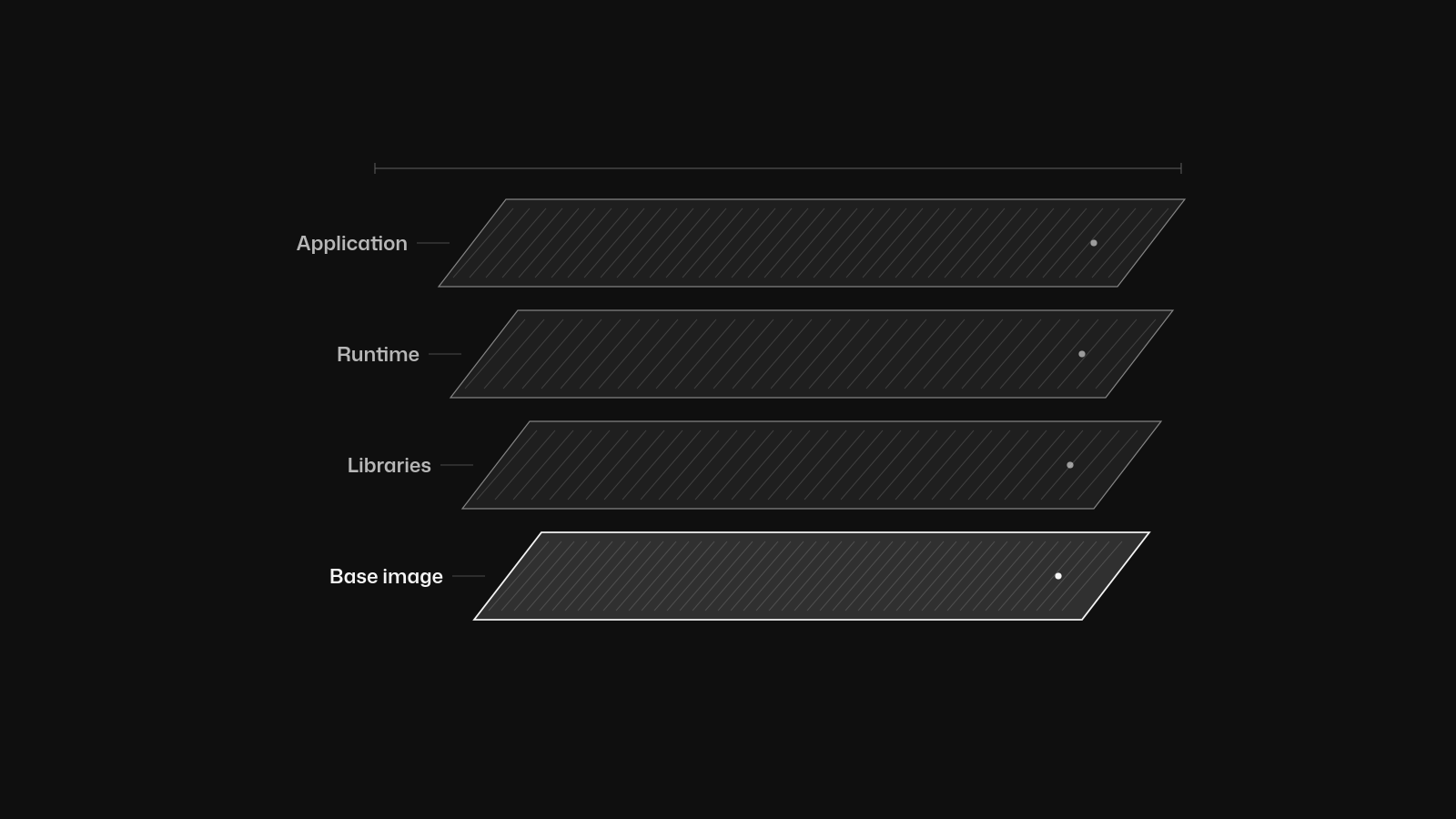
Negative testing for APIs should include tests for missing, expired, malformed, and incorrectly scoped credentials. You cannot assume your authentication logic works just because the happy path passes. You must actively try to break it.
This is a cornerstone of API Architecture and Security Best Practices.
API security architecture requires assigning an owner and a test for every control, rather than just mapping it on a diagram. If a control does not have a test, it does not exist.
Let's look at a negative test suite configuration. You can use a tool like Postman or a custom test runner to execute these tests in your CI/CD pipeline.
{
 "name": "Negative Auth Tests",
 "tests": [
 {
 "name": "Missing Auth Header",
 "request": {
 "method": "GET",
 "url": "/api/users",
 "headers": {}
 },
 "expectedStatus": 401
 },
 {
 "name": "Expired Token",
 "request": {
 "method": "GET",
 "url": "/api/users",
 "headers": {
 "Authorization": "Bearer expired_token_string"
 }
 },
 "expectedStatus": 401
 }
 ]
}
Runtime threat detection for APIs monitors anomalies in authentication patterns, unusual response sizes, and spikes in 4xx/5xx error responses. You need to collect telemetry to detect these threats.
Minimum log data fields for API telemetry include timestamp, client ID, request/response status, and endpoint identifier. Without these fields, you cannot correlate events.
Here is a checklist for your negative tests: 1. Send a request with no authorization header. 2. Send a request with an expired token. 3. Send a request with a malformed token. 4. Send a request with a valid token but incorrect scopes.
API security architecture requires assigning an owner and a test for every control, rather than just mapping it on a diagram.
When you set up runtime threat detection, you are looking for patterns, and a sudden spike in 401 Unauthorized responses might indicate a brute force attack. A spike in 403 Forbidden responses might indicate a compromised token being used to access unauthorized resources.
Unusual response sizes are another red flag. If an endpoint that normally returns 2KB of data suddenly returns 2MB, you might have a data exfiltration vulnerability. You need to monitor these metrics in real-time.
Every time I have seen this fail, the cause was the same: the team collected logs but never analyzed them. The fix was setting up automated alerts based on anomaly detection. You cannot manually review logs in a microservices architecture.
You must also consider the risk factors. If you have a public API, you are a target, and you need to set up rate limiting and anomaly detection. If you have an internal API, you still need to monitor for compromised credentials.
Your test suite should be part of your deployment pipeline. If a negative test fails, the deployment should be blocked, and this ensures that security regressions do not reach production.
Consider the various types of attacks. A malformed token might not just be a string of random characters, and it might be a JWT with an altered payload. Your tests should cover these specific attack vectors.
You should also test your rate limiting. Send a burst of requests and verify that the gateway returns a 429 status code. This confirms your throttling measures are working as expected.
Building something similar? Let's compare notes.
Response within 24 hours. No commitment required.
What Are the Operational Costs of Centralized vs Distributed Gateways?
Three API gateway patterns exist: Centralized gateway, Hybrid gateway, and Distributed gateway. Choosing between them is a trade-off between latency and operational complexity, and this decision impacts your API Architecture and Security Best Practices.
A centralized gateway forces all traffic through a single choke point. This adds latency, especially for internal service-to-service calls. If service A needs to call service B, the request goes to the gateway, then to service B. That is two network hops instead of one.
Runtime protections include encryption in transit, end-user and service-to-service auth/authz. In a distributed gateway pattern, you implement mTLS using sidecar proxies, and this adds CPU overhead to every service. It removes the network hop.
The operational complexity of a distributed gateway is high, and you need to manage a control plane, distribute certificates, and troubleshoot a mesh. A centralized gateway is simpler to operate, but it limits your scalability.
A centralized gateway adds network latency for internal calls, while a distributed gateway shifts the operational burden to service mesh management.
Let's look at the latency overhead, and a centralized gateway might add 5-10 milliseconds to every request. For a user-facing API, this might be acceptable. For an internal microservice making hundreds of calls to other services, this latency compounds quickly.
It can degrade the overall performance of your system.
In a distributed pattern, you use mTLS to secure service-to-service communication, and the sidecar proxy handles the encryption and decryption. This consumes CPU cycles on the service host. You need to size your instances accordingly.
The operational cost of a distributed gateway is not just CPU, and it is also the cost of engineering time. Your team needs to understand the service mesh. They need to know how to debug it when things go wrong. This is a significant investment.
A centralized gateway is easier to reason about, and you have one place to look for routing rules. You have one place to check for security policies. But this simplicity comes at the cost of scalability. As your traffic grows, the centralized gateway becomes a bottleneck.
You must weigh these factors. Do you have the engineering capacity to manage a service mesh? Can you afford the latency of a centralized gateway?, and the answer depends on your specific requirements.
Consider the deployment pipeline. In a centralized model, deploying a new gateway configuration can affect all services. In a distributed model, you can roll out changes gradually, and this reduces the risk of a global outage.
The technology you choose also matters, and some gateways are optimized for low latency. Others are optimized for ease of use. You need to pick the tool that fits your operational model.
Contrarian View: Why a Single Centralized Gateway Fails at Scale
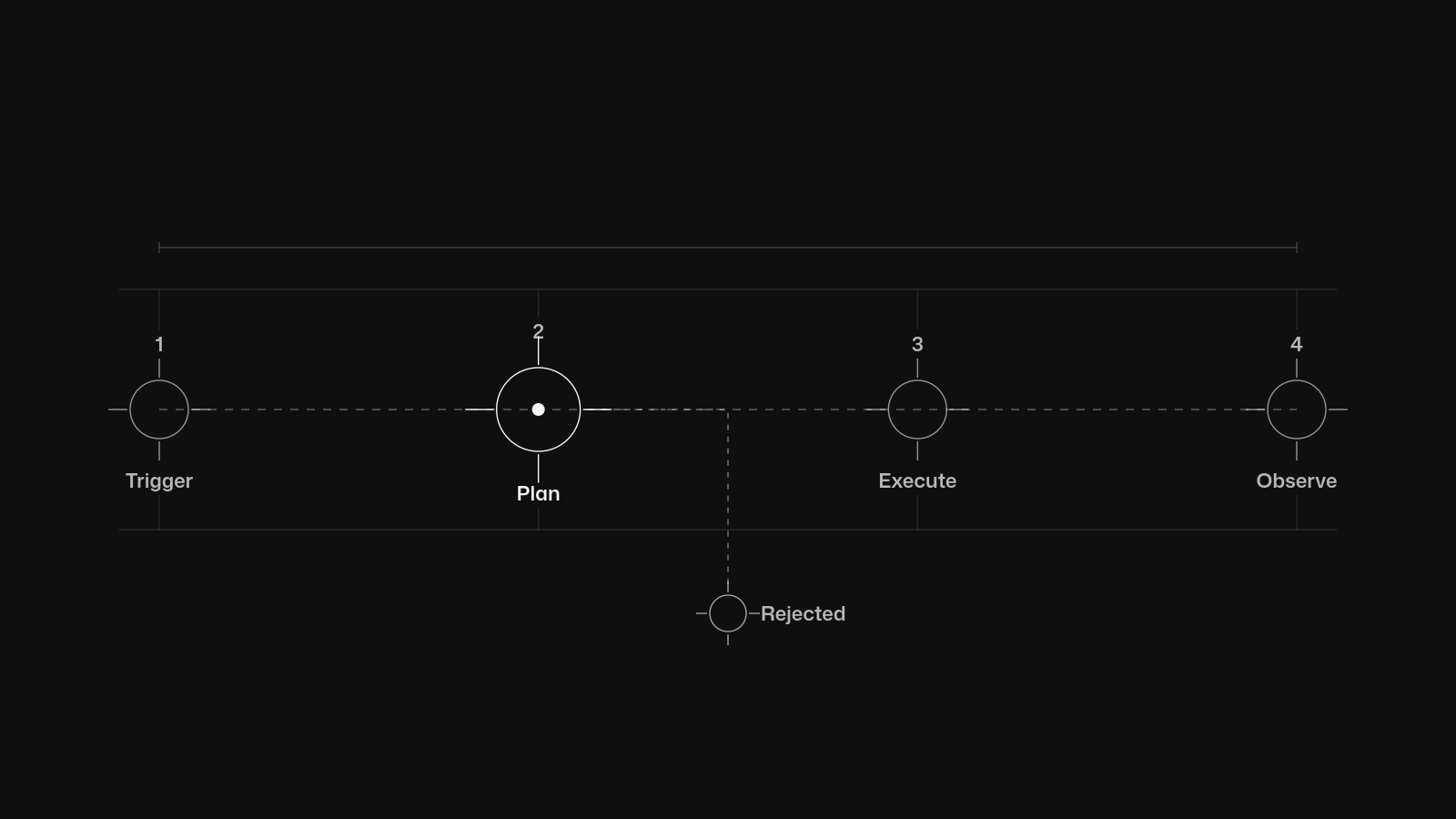
Routing all API traffic through one centralized gateway is a recipe for disaster at scale. It creates a single point of failure. If the gateway goes down, your entire system is unreachable, and this violates the core principles of API Architecture and Security Best Practices.
A centralized gateway also increases latency for internal service-to-service calls. This hinders independent team deployments. If every team has to route their internal traffic through a central choke point, they lose autonomy. They become coupled to the gateway team's release schedule.
Organizations should enforce API versioning, deprecation policies, and regular key/token rotation. API security is not a single plugin or protocol; effective protection comes from combining them, and you cannot rely on a single gateway to solve all your security problems.
A single centralized gateway creates a single point of failure and hinders independent team deployments at scale.
When you scale to hundreds of microservices, the centralized gateway becomes a bottleneck. Every new service requires a routing rule, and every change requires a gateway deployment. This slows down your development velocity.
You need to decouple your gateway architecture to support distributed workflows, and this means adopting a hybrid or distributed model. It means pushing security controls closer to the services.
Consider the impact on team autonomy. If a team wants to deploy a new service, they should not have to wait for the gateway team to update the configuration. They should be able to deploy their service and have the mesh automatically route traffic to it.
This requires a shift in mindset. You move from a centralized control model to a distributed trust model. You rely on mTLS and service identity rather than a central choke point.
The decision you now have to make is whether to decouple your gateway architecture. Do you keep the simplicity of a centralized model, or do you embrace the complexity of a distributed mesh to gain performance and autonomy? Your choice will define your platform's ability to scale.
Ready to build something that lasts?
Response within 24 hours. No commitment required.