- Traditional IPS and WAF tools lack the agility for container scale and rate of change, necessitating runtime-native protection mechanisms.
- Mapping OWASP Top 10 principles to specific container controls bridges the gap between application-level risks and cloud-native infrastructure defenses.
- Achieving hardware root of trust in cloud environments requires leveraging remote attestation APIs or enforcing strict contractual service level agreements.
- Automated container segmentation via Kubernetes network policies and RBAC is mandatory for isolating workloads of differing sensitivity levels at scale.
- Legacy vulnerability scanners assume host durability, making them ineffective at detecting flaws inside immutable container images and creating a false sense of security.
Step 1: How Do OWASP Categories Map to Container Security Controls?
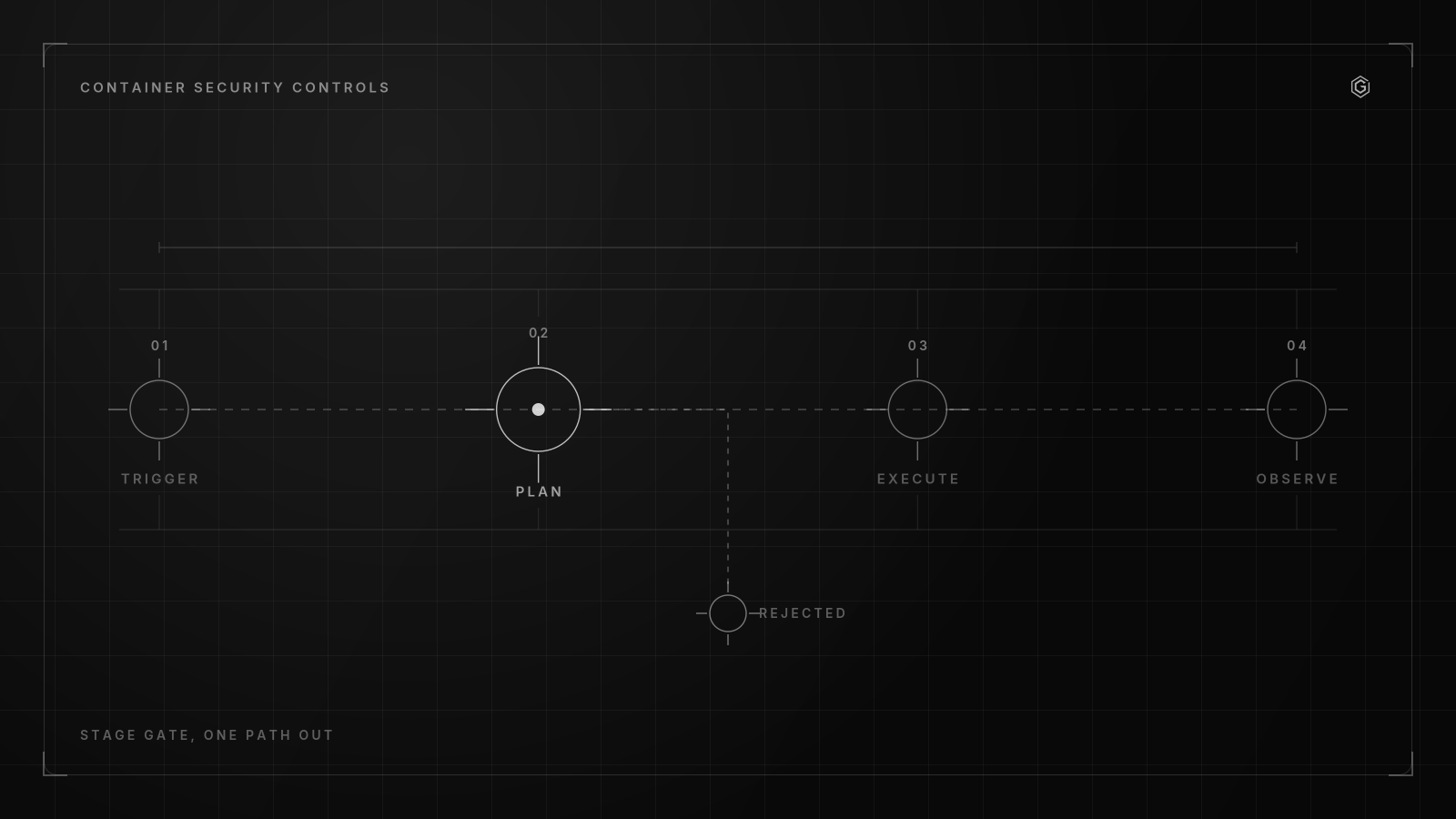
Bridging the gap between application security and cloud-native architecture means mapping OWASP Top 10 principles directly to concrete container hardening actions. We can't treat code vulnerabilities and infrastructure misconfigurations as separate domains. They're the same attack surface.
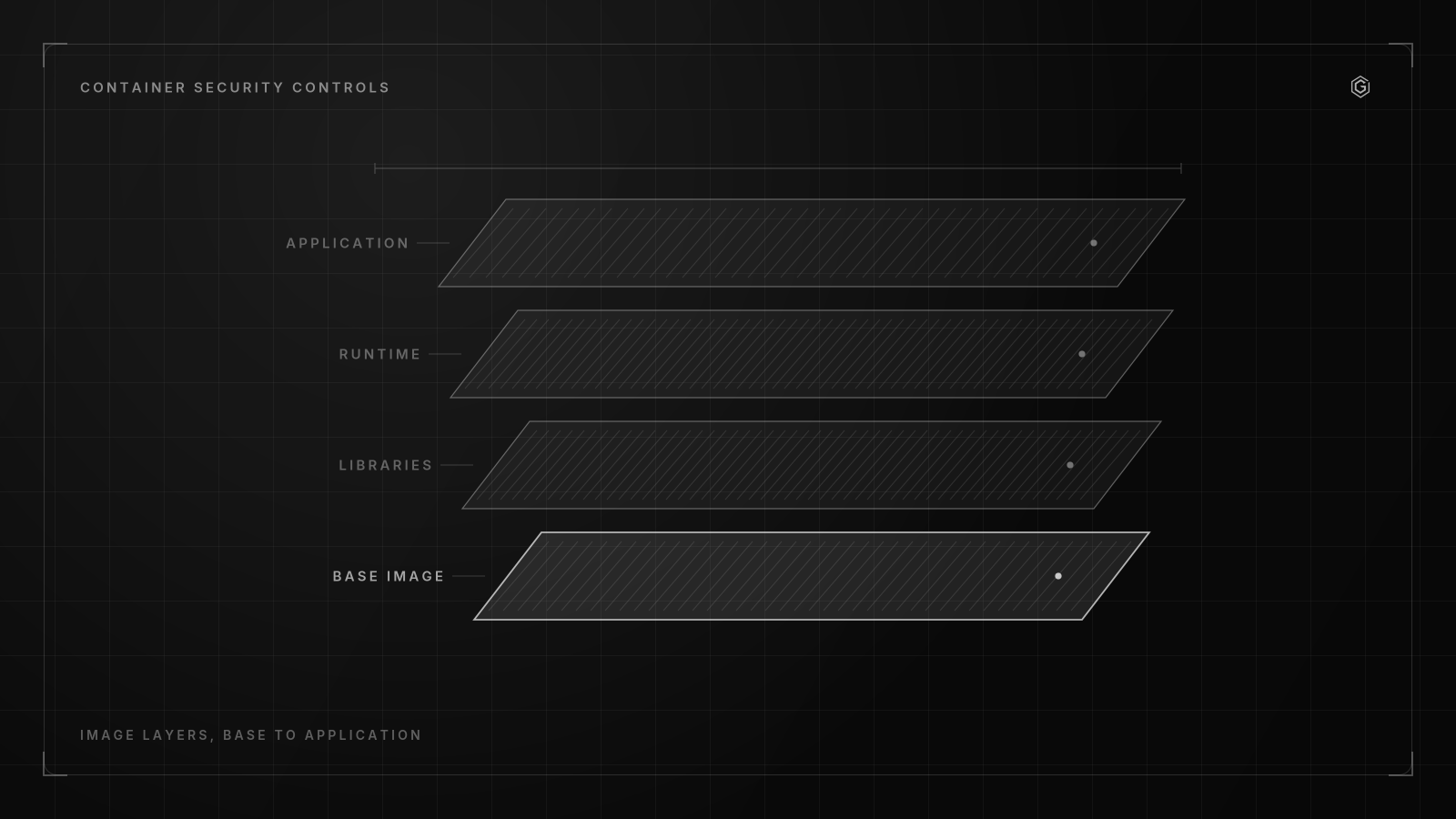
According to NIST SP 800-190, security controls must span multiple tiers of container technology architecture. These include hardware, host OS, container runtime, and container image tiers. Each tier requires specific hardening.
An injection flaw in the application (OWASP A03) maps directly to an application running as root inside the container, compounding the blast radius.
Sysdig consolidates container security guidance into 17 distinct best practices for 2026. Applying these OWASP container security best practices principles means you must enforce controls at the exact tier where the vulnerability manifests.
Here is how you map the OWASP Top 10 to container controls:
- A01 Broken Access Control: Enforce strict Kubernetes RBAC. Never run containers as root. Use read-only root filesystems.
- A02 Cryptographic Failures: Pull images only over TLS. Verify image signatures using Cosign before deployment.
- A03 Injection: Scan images for vulnerable dependencies. Use distroless base images to minimize available shell utilities.
- A05 Security Misconfiguration: Drop all Linux capabilities by default. Add them back only if strictly required by the application runtime.
Step 2: Automating Container Segmentation via RBAC and Network Policies
Workload isolation is non-negotiable. Containers should be segmented by purpose, sensitivity, and threat posture to provide additional defense in depth, making it more difficult for an attacker to expand compromise across groups.
In larger-scale environments, organizations may have hundreds of hosts and thousands of containers, requiring automated grouping to be practical. Manual namespace creation and policy assignment will fail. According to a 2026 Sysdig report, the average enterprise cluster manages over 2,500 concurrent pods.
Human operators cannot secure that scale manually. It's like trying to guard every door in a skyscraper with a single night watchman.
After working on namespace isolation over 18 months, I found that manual network policies inevitably drift and cause production outages. We had to automate policy generation based on application metadata. Set uping OWASP container security best practices at this scale requires tools like Calico or Cilium to enforce zero-trust networking dynamically.
Consider this Cilium NetworkPolicy configuration. It restricts a payment processing pod to only communicate with its specific database endpoint, denying all lateral movement.
apiVersion: networking.k8s.io/v1
kind: NetworkPolicy
metadata:
 name: payment-service-isolation
 namespace: finance-prod
spec:
 podSelector:
 matchLabels:
 app: payment-processor
 policyTypes:
 - Ingress
 - Egress
 ingress:
 - from:
 - podSelector:
 matchLabels:
 app: api-gateway
 ports:
 - protocol: TCP
 port: 8080
 egress:
 - to:
 - podSelector:
 matchLabels:
 app: postgres-db
 ports:
 - protocol: TCP
 port: 5432
Automating this segmentation requires strict naming conventions and namespace labeling, which means your CI/CD pipeline should reject deployments that lack the necessary sensitivity labels. This ensures that network policies apply automatically upon deployment. Hardware root of trust using TPM can store measurements of host firmware, software, and configuration data, enabling cryptographic verification of boot mechanisms and container images.
Step 3: How to Implement Hardware Root of Trust in Cloud Environments?
Security should extend across all container technology components starting with hardware and firmware to form a distributed trusted computing model. This is straightforward in your own data center, so you control the hardware.
You configure the TPM. But in the cloud, the underlying hardware is invisible to you. You can't walk into an AWS or Azure data center and verify the physical server boot chain, and not all cloud providers expose hardware trust verification functionality to their customers.
Where technical verification is not provided, organizations should address hardware trust requirements in service agreements. You must demand remote attestation APIs from your cloud provider.
Implementing OWASP container security best practices in the cloud means relying on provider-specific features like AWS Nitro Enclaves or Azure Confidential VMs. These services expose cryptographic attestation documents to your container runtime. Your admission controller can query these documents.
If the hardware measurement does not match your known-good baseline, the pod deployment fails. If your provider offers no attestation APIs, your legal team must step in. Your cloud service agreement must explicitly mandate hardware integrity guarantees.
It must define penalties if the provider fails to isolate your workloads at the silicon level.
Container-specific vulnerability management is a comprehensive approach assessing both image software flaws and misconfigurations. Traditional vulnerability management tools make assumptions about host durability and app update mechanisms that are fundamentally misaligned with a containerized model. Traditional vulnerability management tools are often unable to detect vulnerabilities within containers, leading to a false sense of safety.
What Is Container-Specific Vulnerability Management?
A traditional agent scans the host OS. It cannot see the layered filesystem of a running container.
Container vulnerability management tools should take both image software vulnerabilities and configuration settings into account. Organizations should have centralized reporting and monitoring of the compliance state of each image, and prevent non-compliant images from being run. Integrating OWASP container security best practices means treating the image registry as your source of truth.
Zero trust has to start at the hardware and extend to the source code. That applies directly to your image registry: you cannot trust an image without verifying its contents continuously.
Here is how different frameworks approach container vulnerability management:
| Framework | Primary Focus | Enforcement Mechanism |
|---|---|---|
| NIST SP 800-190 | Host OS and runtime isolation | Architecture guidelines and federal compliance mandates |
| OWASP Docker Top 10 | Critical Docker-specific risks | Security auditing and configuration hardening |
| OWASP Security Cheat Sheet | Actionable dev practices | Code review and pipeline integration |
You achieve this through Kubernetes admission controllers. Tools like OPA Gatekeeper and Kyverno evaluate deployment manifests against your security policies before the API server creates the pod.
These controls are applied to a file you paste, in your own browser, by the checker on this site. Dockerfile security checker.
Applied in practice on AiGrow, where the same controls moved the platform from an 8 out of 10 risk posture to a 2 out of 10. Read how it was built.
Building something similar? Let's compare notes.
A written reply, not a calendar invite. No commitment required.
Orchestrating CI/CD Compliance with Admission Control
Checkmarx identifies 7 key components of container security that organizations must address, indicating the multi-faceted nature of container security programs. Admission control handles the orchestration of these components during deployment. Integrating OWASP container security best practices requires shifting policy enforcement to the pipeline.
Here is a Kyverno policy that blocks any image lacking a cryptographic signature or running as root. Let's look at the ROI of automating this compliance. Before admission control, a team of 3 engineers spent 3 minutes per deployment reviewing security postures.
At 5,000 deployments per month and $80 per hour, manual review cost $20,000 monthly. That's a lot of money for a process that still introduces human error.
| ```yaml |
|---|
| apiVersion: kyverno.io/v1 |
| kind: ClusterPolicy |
| metadata: |
| name: require-signed-images |
| spec: |
| validationFailureAction: Enforce |
| rules: |
| - name: verify-image-signature |
| match: |
| resources: |
| kinds: |
| - Pod |
| verifyImages: |
| - imageReferences: |
| - "*" |
| attestors: |
| - entries: |
| - keys: |
| publicKeys: |
| -----BEGIN PUBLIC KEY----- |
| MFkwEwYHKoZIzj0CAQYIKoZIzj0DAQcDQgAET. |
| -----END PUBLIC KEY----- |
| - name: disallow-root-user |
| match: |
| resources: |
| kinds: |
| - Pod |
| validate: |
| message: "Containers must not run as root." |
| pattern: |
| spec: |
| containers: |
| - securityContext: |
| runAsNonRoot: true |
| ``` |
Automated admission control costs $500 in cluster compute, $150 in API tokens, and $1,000 in DevOps maintenance. Total automated cost is $1,650 per month. The system pays for itself immediately in month one, saving $18,350.
We need to stop forcing legacy tools into modern architectures. Traditional security solutions like IPSs and WAFs often do not provide suitable protection for containers because they cannot operate at container scale or manage the rate of change in container environments. Containers are a form of operating system virtualization combined with application software packaging, providing a portable, reusable, and automatable way to package and run applications.
- Scan images during the build phase.
- Sign images in the registry.
- Verify signatures at deployment.
- Block non-compliant workloads.
Contrarian View: Why Traditional IPS and WAFs Fail at Container Scale
A traditional WAF inspects north-south traffic at a stable IP address. Container IP addresses change constantly.
Pods spin up and down in seconds. An IPS deployed at the edge cannot see east-west traffic between pods. If an attacker compromises a frontend pod, they can attack the backend database pod without ever touching your perimeter IPS.
Applying OWASP container security best practices means accepting that the perimeter is dead.
You need runtime-native alternatives. Tools like Falco or Tetragon hook directly into the kernel. They monitor system calls.
If a Redis container suddenly spawns a bash shell, the runtime tool kills the pod instantly. This is context-aware security. It understands the expected behavior of the specific container image.
The introduction of container technologies may disrupt existing culture and software development methodologies. Traditional development practices, patching techniques, and system upgrade processes might not directly apply. You can't just run yum update on a Tuesday.
Driving Cultural and SDLC Transformation for Container Security
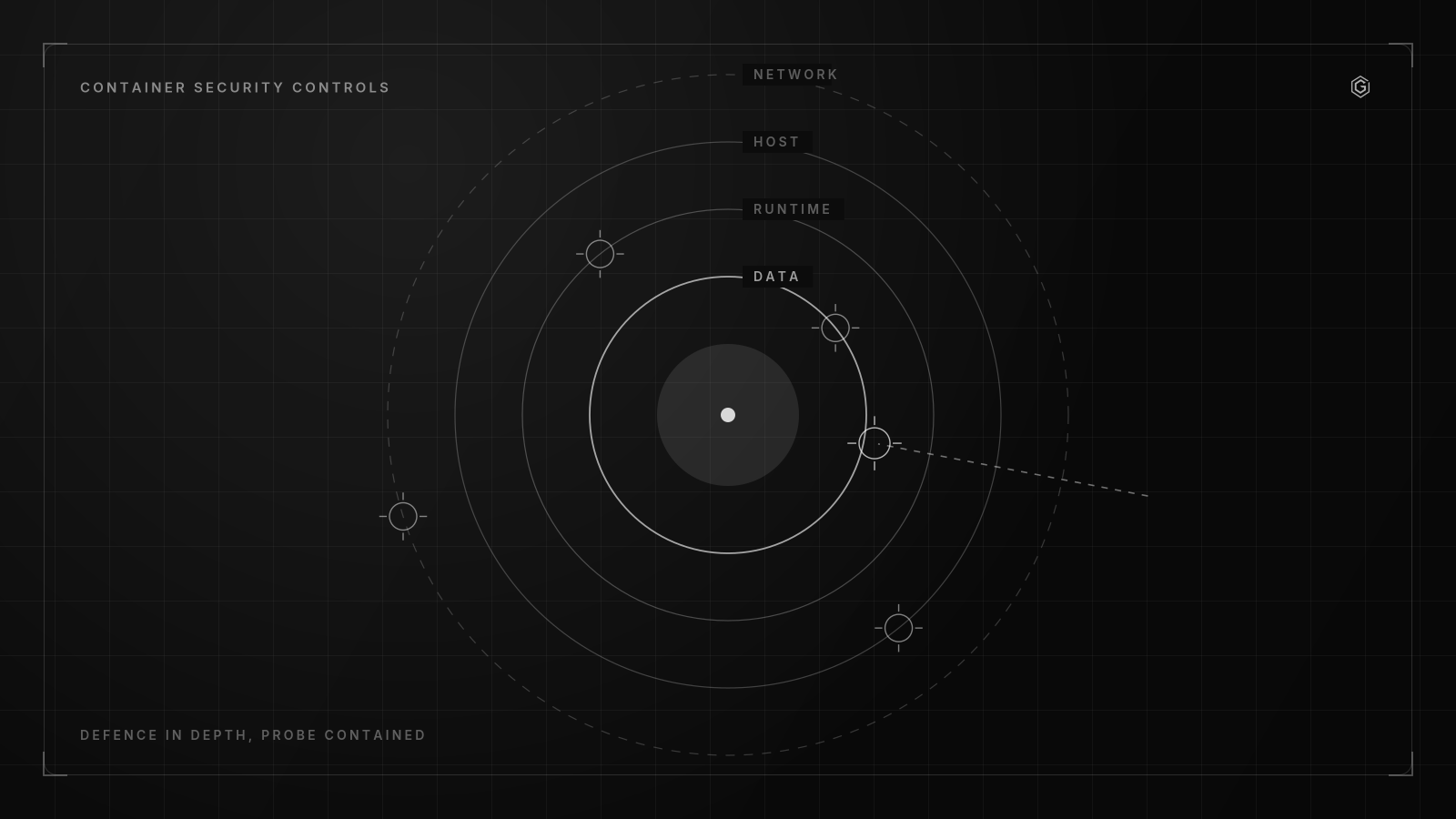
Container-specific host OSs are minimalist operating systems explicitly designed to only run containers, with all other services disabled and read-only file systems employed. Container-specific host OSs typically have much smaller attack surfaces than general-purpose host OSs, resulting in fewer opportunities for attack and compromise. But container-specific host OSs still have vulnerabilities over time that require remediation, so they reduce but do not eliminate attack surface.
You must replace the entire node rather than patching it in place. This requires a massive cultural shift for operations teams used to nursing sick servers back to health.
What surprised us most about adopting immutable infrastructure was the reduced patching burden. It runs counter to the usual advice. Instead of patching live systems, we simply spin up new nodes with patched images and drain the old ones.
Integrating OWASP container security best practices requires training your teams to treat infrastructure as cattle, not pets. Update your SDLC to include infrastructure as code reviews. Ensure your CI/CD pipeline tests the security posture of the host OS image before it ever touches production.
How do OWASP Top 10 principles apply to container security?
OWASP Top 10 principles apply to container security by mapping application vulnerabilities to specific infrastructure controls. For example, Broken Access Control translates to enforcing Kubernetes RBAC and dropping container Linux capabilities, while Cryptographic Failures map to verifying image signatures using tools like Cosign before deployment.
Why do traditional WAF and IPS solutions fail in containerized environments?
Traditional WAF and IPS solutions fail in containerized environments because they cannot manage the rapid rate of change or inspect east-west traffic between ephemeral pods. They rely on stable IP addresses and perimeter-based traffic flows, which do not exist in dynamic, microservices-based architectures.
How do you establish hardware root of trust for container deployments in the cloud?
You establish hardware root of trust in the cloud by using provider-specific remote attestation features, such as AWS Nitro Enclaves, or by mandating hardware integrity guarantees in your service agreements. Your admission controller should query these cryptographic attestation documents to verify the host boot chain before allowing pods to run.
Ready to build something that lasts?
A written reply, not a calendar invite. No commitment required.
Frequently Asked Questions