What Does NIST SP 800-207 Actually Mandate for Backend Service Identity?
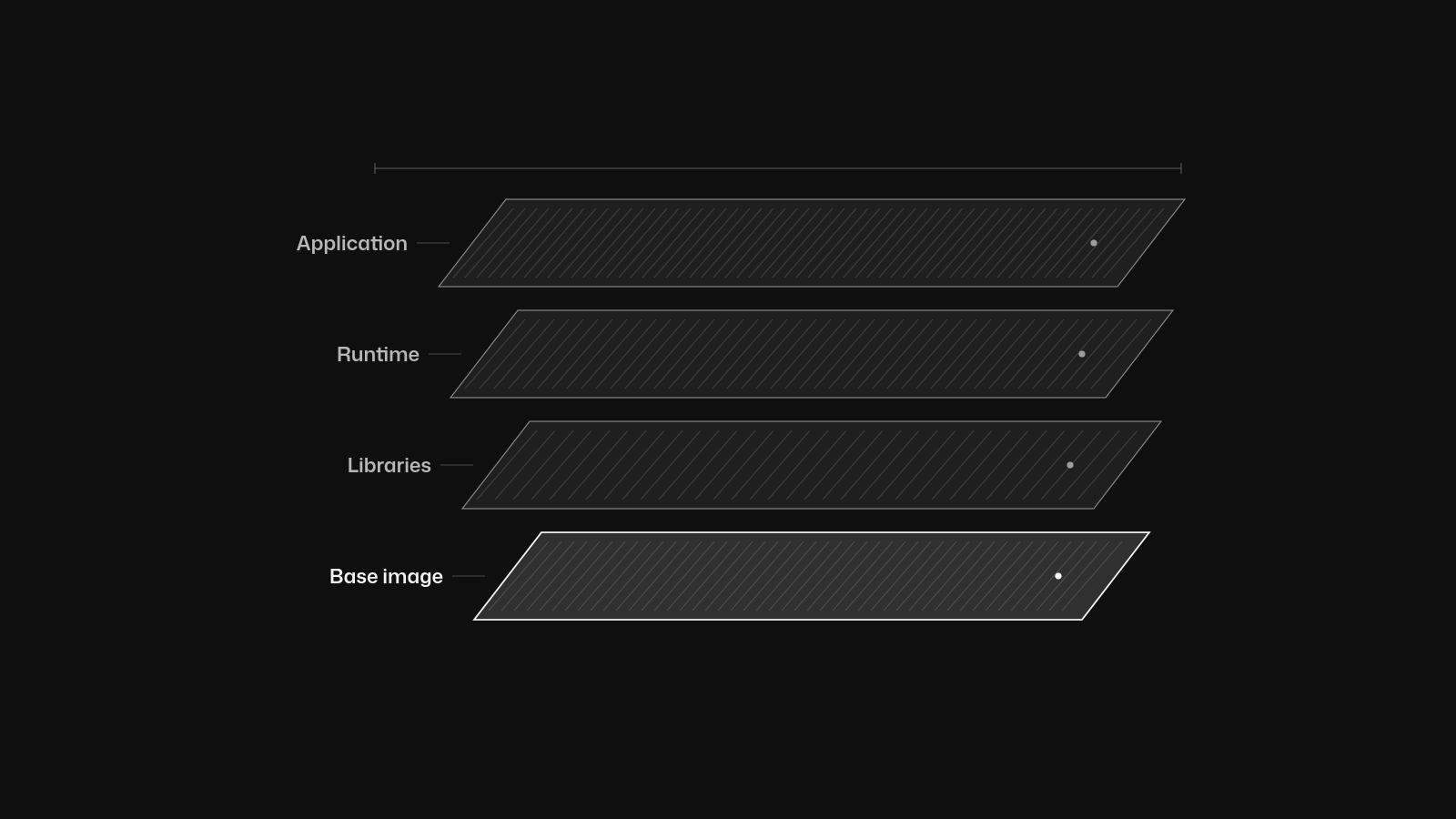
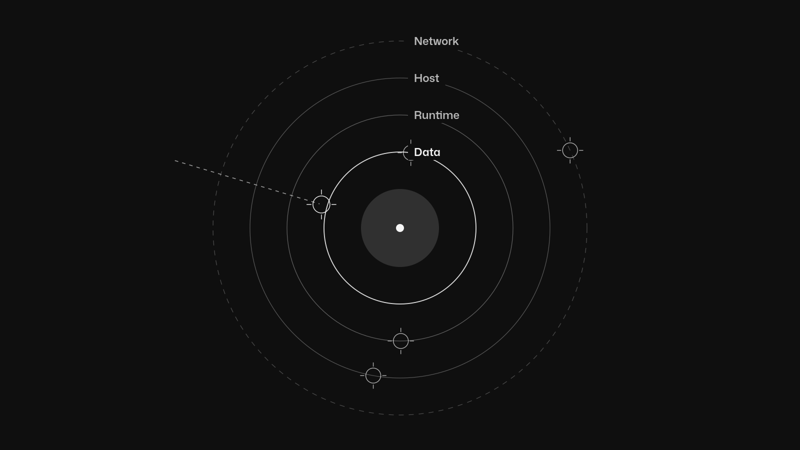
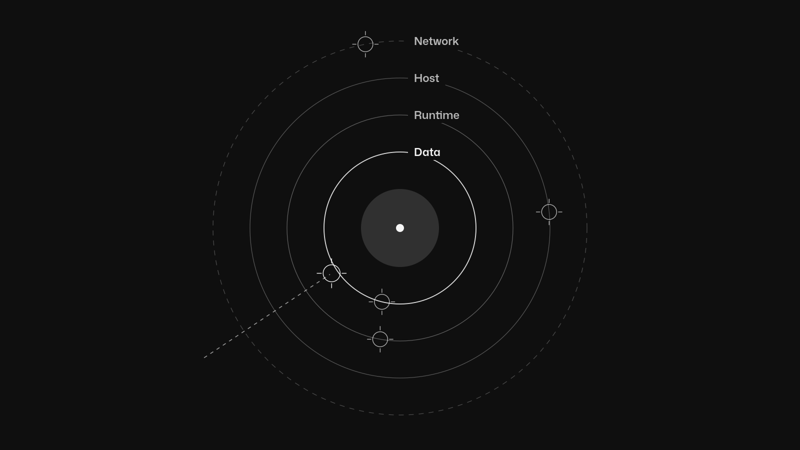
NIST SP 800-207 defines Zero Trust Architecture (ZTA) as a shift away from static network perimeters, focusing instead on users, assets, and resources. The specification is not a vendor mandate. It is a strict set of rules for planning enterprise infrastructure that requires every single access decision to be evaluated dynamically based on identity and context.
And NIST SP 800-207A builds on this by providing a ZTA model specifically for access control in cloud-native applications across multi-location environments. It addresses the harsh reality that backend services now span multiple clouds and edge locations. Static IP-based trust is completely impossible.
NIST SP 1800-35 explains how organizations can build a ZTA consistent with these concepts, offering a practical path forward. The National Cybersecurity Center of Excellence (NCCoE) built 19 ZTA example createations with 24 collaborators under Cooperative Research and Development Agreements (CRADAs). This finally gives architects a concrete reference rather than abstract theory, bridging the massive gap between high-level government standards and actual daily engineering work.
But when you map these requirements to zero trust network design for backend services, you must account for specific gaps the NCCoE set upations left open, which means you need to enforce strict rules.
- Service Identity: You must establish a unique, verifiable identity for every service, completely decoupled from the network address.
- Contextual Decisioning: Authorization must evaluate device posture, time, and resource sensitivity at request time.
- Continuous Monitoring: Trust is not established once at connection setup. You must log and monitor every single access attempt.
The spec demands that you stop assuming trust based on network location, and your backend endpoints must always require cryptographic proof of identity for every interaction.
Step 1: Establish Per-Request Identity with AWS SigV4 and Service-Linked Roles
AWS SigV4 request signing is an identity-centric control that uniquely authenticates and authorizes each signed API request, providing fine-grained access controls across your entire distributed architecture. AWS API endpoints are reachable from the internet. Security does not depend on network reachability; it relies on TLS augmented by AWS Signature v4 signing.
AWS services call each other using service-linked roles and short-term credentials, signing requests via SigV4. For example, AWS Auto Scaling assumes a service-linked role to call the Amazon EC2 API.
AWS IAM authenticates and authorizes incoming calls for EC2 even between AWS services, meaning AWS Auto Scaling and EC2 have no inherent trust of one another. According to AWS, SigV4 authenticates and authorizes every signed API request at rates of millions upon millions of requests per second globally. AWS CloudTrail provides a record of privileges used by service-linked roles, giving customers visibility into service-to-service calls.
This visibility is the foundation of zero trust network design for backend services in AWS.
I got this wrong the first time. I assumed IAM authorization on the API Gateway was enough for my backend endpoints. What fixed it was enforcing SigV4 signing on every internal service-to-service call, which immediately caught a misconfigured proxy bypassing role checks during a late-night deployment.
Configuring this requires understanding the costs. You face per-request signing overhead, IAM policy debugging complexity, and cold-start impact on Lambda-based signers.
- Attach a service-linked role: Ensure your compute resource assumes a role scoped to the exact API actions required.
- Build the signer: Use the AWS SDK to sign outgoing requests automatically.
- Verify CloudTrail: Confirm that service-to-service calls appear in CloudTrail with the assumed role ARN.
Here is a minimal IAM policy for a service-linked role that allows a backend service to read from a specific S3 bucket. Notice the explicit resource binding.
{
 "Version": "2012-10-17",
 "Statement": [
 {
 "Effect": "Allow",
 "Action": [
 "s3:GetObject"
 ],
 "Resource": [
 "arn:aws:s3:::backend-config-bucket-prod/*"
 ]
 },
 {
 "Effect": "Allow",
 "Action": [
 "sts:AssumeRole"
 ],
 "Resource": [
 "arn:aws:iam::123456789012:role/BackendDataAccessRole"
 ]
 }
 ]
}
If you misconfigure the policy, the operator sees an AccessDenied error in CloudTrail with no indication of which statement failed. You must use the IAM Policy Simulator to debug.
Step 2: Enforce Mutual TLS Between API Gateway and Backend Implementations
Amazon API Gateway supports AWS IAM authorization, DDoS protection, rate limiting, and mutual TLS for backend calls. With AWS IAM authorization in API Gateway, callers sign requests using AWS credentials. IAM authenticates and authorizes every call according to policies.
Calls from API Gateway to backend implementations are secured by mutual TLS, ensuring only API Gateway can invoke the backend. API Gateway provides DDoS protection and rate limiting as standard features when exposing APIs. Backend applications in the AWS sample are hosted on Amazon ECS Fargate and AWS Lambda.
To implement zero trust network design for backend services, you must configure mTLS between the gateway and the compute layer. This involves uploading a trust store to API Gateway. The gateway presents its certificate to the backend, and the backend validates it against the trust store.
Certificate management overhead becomes a real operational burden. Trust chain rotation failure modes are brutal. If your intermediate certificate expires and you rotate it incorrectly, API Gateway drops all traffic to the backend.
You get a 403 Forbidden or a TLS handshake failure with no clear log in the application.
The API Gateway trust store upload limits constrain multi-team ownership. You can only upload a limited number of certificates to a single API Gateway stage. If multiple teams own different backend services and want to use their own CA, you hit this limit quickly.
- Certificate Provisioning: Use AWS Certificate Manager Private CA to issue internal certificates.
- Trust Store Management: Bundle the root and intermediate certificates in a PEM file and upload it to API Gateway.
- Backend Validation: Configure your ECS Fargate task or Lambda function to require client certificates.
If you do not enforce mTLS on the backend, any resource with network access to the Fargate task can send a request. The mTLS layer ensures the request came from the specific API Gateway endpoint.
Identity-Centric vs Network-Centric Controls: A Measured Comparison
Amazon EC2 security groups provide dynamic, software-defined network micro-perimeters for north-south and east-west traffic, and their rules can reference other security groups by ID across peered networks. This is useful. But security groups govern reachability, not authorization.
A zero trust network design for backend services requires both, because according to AWS, SigV4 authenticates and authorizes every signed API request at rates of millions upon millions of requests per second globally. API Gateway provides DDoS protection and rate limiting as standard features when exposing APIs.
You must understand the trade-offs between these controls. Using only security groups is fast but lacks context. Using only SigV4 is precise but adds signing overhead.
| Control | Latency Overhead | Authorization Granularity | Primary Failure Mode |
|---|---|---|---|
| Security Groups | Negligible (kernel level) | IP/Port only | Compromised host has full lateral access |
| AWS SigV4 | Milliseconds (hashing) | IAM Policy (Action/Resource) | Stolen temporary credentials |
| Mutual TLS | Low (handshake caching) | Certificate/Common Name | Trust chain expiration |
| API Gateway IAM | Low (gateway handles it) | Method/Resource level | Policy misconfiguration |
Do not treat these as mutually exclusive. You need security groups to limit the blast radius of a compromised instance, and you need SigV4 to prevent that compromised instance from making unauthorized API calls across your distributed system. The decision to use one over the other depends on the sensitivity of the endpoint and the operational capacity of your team.
Step 3: Architect a Multi-Account Zero Trust Topology with Security Groups as Micro-Perimeters
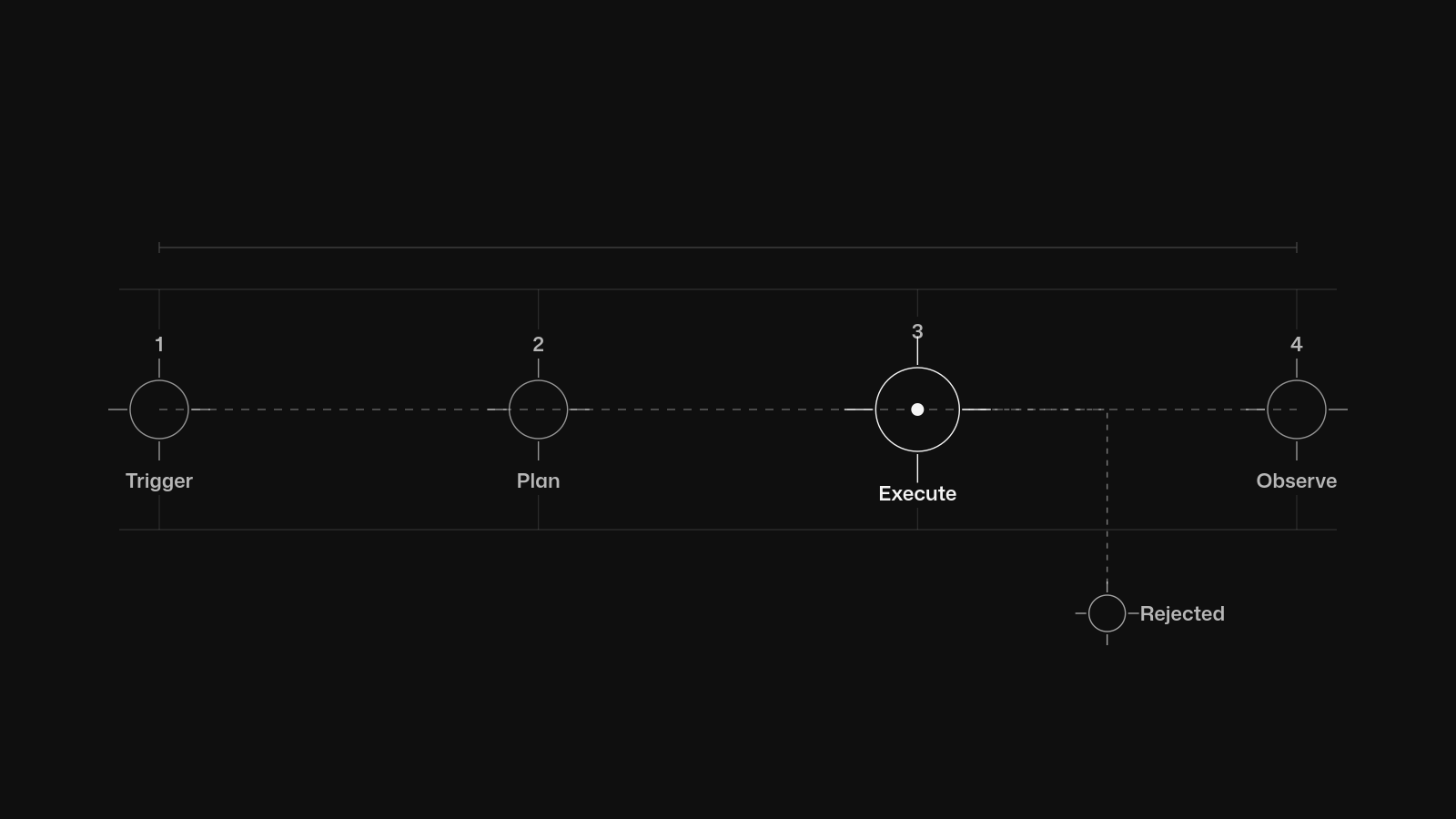
The AWS moving-to-zero-trust sample requires exactly 3 AWS accounts: central Networking, frontend, and backend. Backend applications in the AWS sample are hosted on Amazon ECS Fargate and AWS Lambda, and this separation forces explicit trust boundaries between the presentation layer and the processing layer.
Amazon EC2 security groups provide dynamic, software-defined network micro-perimeters for north-south and east-west traffic, allowing rules to reference other security groups by ID across peered networks. This capability is the backbone of multi-account zero trust network design for backend services, and the frontend account cannot simply route traffic to the backend account's CIDR block. It must reference a specific security group in the backend account, tightly coupling access to the exact resource.
AWS Verified Access enables VPN-less user authentication and authorization, and expects AWS Identity Center (not created in the sample repo). According to the AWS documentation, this service replaces traditional VPNs by evaluating trust on every request. The operational cost of managing trust boundaries across accounts and regions is high, and you must manage route tables, transit gateways, and security group references simultaneously.
A misconfiguration in the security group reference leaves the backend endpoint completely unreachable.
- Account Isolation: Keep networking, frontend, and backend in separate accounts to isolate blast radius.
- Cross-Account Peering: Establish VPC peering or Transit Gateway connections between the accounts.
- Security Group References: In the backend account, create a security group that only allows ingress from the frontend account's specific security group ID.
- Verified Access: Create AWS Verified Access for human users, ensuring they authenticate via Identity Center before reaching the frontend.
Building something similar? Let's compare notes.
Response within 24 hours. No commitment required.
Uncommon Insight: Why Network Micro-Perimeters Alone Fail Without Per-Request Authorization
Conventional wisdom treats security group segmentation as sufficient zero trust for east-west traffic, but this is a dangerous oversimplification. Amazon EC2 security groups provide dynamic, software-defined network micro-perimeters for north-south and east-west traffic, and their rules can reference other security groups by ID across peered networks in the same or different regions. A compromised pod or task within a security group has unrestricted access to every peer in that group.
Security groups cannot distinguish between a legitimate service call and a lateral movement attempt using the same network path, which is exactly the gap that per-request identity was designed to close.
AWS SigV4 request signing is an identity-centric control that uniquely authenticates and authorizes each signed API request, providing fine-grained access controls. AWS IAM authenticates and authorizes incoming calls for EC2 even between AWS services, meaning AWS Auto Scaling and EC2 have no inherent trust of one another. The version of this I keep coming back to does not rely on the network at all for trust, because security groups only tell you where the packet came from, not who sent it.
Zero trust network design for backend services fails if you stop at network controls. If an attacker compromises a frontend service, they can send requests to the backend service because the security group allows it. If you enforce SigV4 or mTLS on the backend, the attacker must also compromise the signing credentials or the client certificate.
Layering identity enforcement on top of network micro-perimeters is what actually stops lateral movement.
Beyond AWS: Self-Hosted Identity Controls Using SPIFFE, Open Policy Agent, and Kubernetes Network Policies
Zero trust for backend services is achievable outside AWS using equivalent identity-centric controls. NIST SP 800-207 defines Zero Trust as an evolving set of cybersecurity paradigms that move defenses from static, network-based perimeters to focus on users, assets, and resources. NIST SP 800-207A provides a Zero Trust Architecture model for access control in cloud-native applications in multi-location environments, building on NIST SP 800-207.
In Kubernetes, you can build this without AWS-specific primitives like SigV4. You use SPIFFE/SPIRE for service identity via SVIDs, Open Policy Agent for fine-grained authorization at request time, cert-manager for mTLS certificate lifecycle, and Kubernetes NetworkPolicies for micro-segmentation. AWS services call each other using service-linked roles and short-term credentials, signing requests via SigV4, but in a self-hosted environment, SPIFFE provides the equivalent cryptographic identity.
Here is a Kubernetes NetworkPolicy that enforces default deny semantics for a backend service, only allowing access from the frontend.
apiVersion: networking.k8s.io/v1
kind: NetworkPolicy
metadata:
 name: backend-default-deny
 namespace: production
spec:
 podSelector:
 matchLabels:
 app: backend-service
 policyTypes:
 - Ingress
 ingress:
 - from:
 - podSelector:
 matchLabels:
 app: frontend-service
 ports:
 - protocol: TCP
 port: 8080
This YAML provides the network micro-perimeter. To complete the zero trust network design for backend services, you must add an OPA sidecar to evaluate the SPIFFE ID on every request. The operational cost of self-managing each layer is significant.
You are responsible for rotating the SVIDs, updating the OPA policies, and monitoring the cert-manager issuer. If the SPIRE server goes down, your services cannot establish new mTLS connections.
What Are the Documented Defaults and CVE Exposure for Zero Trust AWS Services?

You need to understand the out-of-the-box behavior of these services. AWS Verified Access enables VPN-less user authentication and authorization, and expects AWS Identity Center (not created in the sample repo). By default, Verified Access does not grant access to anything.
You must explicitly attach a trust policy and an access policy to every endpoint.
According to AWS, SigV4 authenticates and authorizes every signed API request at rates of millions upon millions of requests per second globally. This scale means the signing algorithm itself has a massive attack surface. While SigV4 has no critical CVEs recently, library implementation flaws in older SDKs have led to credential leakage if logging sensitive request headers.
Amazon API Gateway supports AWS IAM authorization, DDoS protection, rate limiting, and mutual TLS for backend calls. API Gateway mTLS trust stores have a hard limit of 47 certificates, which is a constraint rarely mentioned until you hit it.
The AWS moving-to-zero-trust sample requires exactly 3 AWS accounts: central Networking, frontend, and backend. This three-account topology is a sample, not a mandate. You can run this in a single account using VPC segmentation, but you lose the blast radius isolation.
When evaluating zero trust network design for backend services, be honest about what is uncertain, and the latency overhead of per-request SigV4 authorization versus security group controls is version-dependent. Newer AWS SDK versions cache the signing key, reducing overhead. Older versions recompute the signature for every request, adding single-digit milliseconds to every call.
You must test this in your specific environment.
Ready to build something that lasts?
Response within 24 hours. No commitment required.